





2007 Land Rover Range Rover Sport
    Change Year
    MSRP: $57,235 - $70,535
    Check out all of the NEXT : GREAT SAFETY options for this vehicle >>

    2007 Land Rover Range Rover Sport Expert Review: Autoblog

    The following review is for a 2006 Model Year. There may be minor changes to current model you are looking at.

    Land Rover’s 2006 Range Rover Sport defies categorization... and as a result, some might view it as a skosh conflicted. Based on the company’s LR3 mechanicals, it looks for all the world like a rakish version of its top-rung Range Rover (with which it confusingly shares its namesake), yet costs almost $20,000 less. It claims to be a top-flight on-road SUV, but it packs the gubbins of a serious off-roader, along with a badge that screams "Paris-Dakar." So what exactly is the Green Oval's newest trying to be? We’ve wrestled the keys to an HSE-spec tester from Land Rover for a weeklong test, and aim to find out.

    Before getting all hot and bothered about performance statistics and dollar signs, hang on, and just soak in the Sport’s aesthetics for a hot minute. It’s gorgeous. Boasting square-jawed, aristocratic good looks, an imposing stance courtesy its standard-issue split five-spoke 19” alloys, and a racier greenhouse than its upright brethren, the Sport presents a look that’s at once more cohesive and upscale than any Porsche Cayenne and Mercedes-Benz M-Class could ever muster. It’s the sort of four-wheeled panache that sends valets jockeying for position, and garners stoplight respect with everyone from pensioners doddering about in their Lincoln Town Cars to wannabe ballers gingerly negotiating potholes in their $1,000 whips rollin' on $3k rims. The Sport commands street-cred without effort, and from all corners. Hell... we hadn’t even had our Landie for 24 hours when a Civic Hybrid driver gave us a once-over and subsequent thumbs-up. That, friends, is cross-genre appeal.

    (Much more after the jump!)

    Okay. So the tail lamps are a shade fussy, but other than that, there’s not much to complain about. Perhaps the rear overhang is a bit long, but the ‘floating’ roofline, three-slat ‘wholey’ grille and fender vents just aft of the strong front wheel openings… they all look the business.


    And it isn’t just the Rover’s badge or appearance that commands respect. Despite the company’s assurances that this package represents their best on-road steer yet, Rover’s boffins have ensured that the Sport still possesses the full Camel Trophy’s-worth of off-road undergarments. Full-time four-wheel drive, all-terrain dynamic stability control, Hill Descent Control, two-speed transfer box (with electronically-governed center locking differential), all-conditions anti-lock  brakes, fully-independent air-suspension at all fours and an off-road enhanced GPS system are all standard-issue. Oh, and lest we forget, the Sport comes with Terrain Response, the company's version of the dial-a-nap knob found on nicer vacuums-- though instead of catering to berber or hardwood, Rover's governs how the Sport shags various topography, from sand dunes to rocky shoals and icy b-roads.

    Underhood, Rover’s Blue Oval parent has raided the PAG executive-class parts bin, nabbing Jaguar’s sequential fuel-injected 4.4-liter V8, tuned to provide 300-horses and 315 ft.-lbs. of torque in our HSE. Certainly not a paltry sum, but with a 5,500-pound curb weight and a ‘Sport’ moniker, it’s got its work cut out for it. Better, perhaps, to plump for the top-shelf Supercharged iteration, which promises to curry further favor with enthusiasts via its intercooled, DOHC 4.2-liter mill (liberated from Jaguar’s S-Type R). With 390 horses and a stout 410 ft.-lbs. of twist, the Supercharged Sport strikes as a much safer bet for eluding pursuers (be they paparazzi or amorous rhinos). Regardless of powerplant, a six-speed ZF automatic rules the roost, complete with a tip-shift sequential manual mode (though no paddles are on offer). And as it’s essentially the same unit that sees duty in PAG-mate Aston Martin’s DB9, it ought to be a good piece.

    As mentioned before, despite aping the Range Rover, the Sport gleans a version of the LR3’s frame (shortened by some 5.5.”), along with its suspension componentry, and much of its drivetrain. For the record, the Sport is also lower and wider, which suits its more athletic intentions on-road intentions. Land Rover also offers something it calls Dynamic Response on the Sport, which is effectively a computer-controlled anti-roll system that electronically adjusts the vehicle’s stabilizer bars front and rear to minimize roll, but ours wasn’t so equipped.

    With the Range Rover Sport, Land Rover is hoping that its unique take on platform (and aesthetic) engineering will help the brand find new audiences, swiping a few sales from BMW’s venerable X5, Infiniti’s FX45, Porsche’s Cayenne and Benz’s revitalized M-Class. When comparably equipped and priced against such competitors, the Rover appears down on gumption, so it will have to make up for its shortcomings via opulent luxury, off-road prowess, and perhaps a dose snob appeal. Does it have the goods? Stay tuned. 

    Depress the button on the Volkswagen-aping switchblade key, pull the meaty handle, and climb aboard. Acrophobics needn't sweat an awkward wardrobe malfunction when clambering in-- the Range Rover Sport can be thoughtfully trained to rest low on its airsprings, as a camel might relent to accommodate its Kalahari master.

    Inside, occupants are greeted with the warm glow of the sat-nav screen (thoughtfully displaying Land Rover's logo, lest one needs reminding) along with a hit of premium cowhide heady enough to give PETA members reason for pause. Ease one's posterior into the driver's seat, and cheeks register a slightly more supportive squab than one might reasonably expect to encounter in an SUV. With a myriad of power adjustments set to whir into motion at a finger's extention (including a trio of  memory positions and power lumbar), comfortable seating for the long haul is all but assured.

    (Climb aboard with almost 20 pictures and full commentary after the jump!)


    As our Landie arrived equipped with Rover's 'Luxury Interior Package,'real cherry trim takes up residence on the doors, dash and transmission tunnel, warming what otherwise might be a dark interior due to the vast expanses of ebony-toned leather. The tiered ziggurat of a center console bisects driver from passenger, blanketed with no less than 50 buttons and switches of all description (not including reams of virtual touchscreen menu 'buttons' awaiting on the monitor). Incorporating everything from HVAC to audio to sat-nav, suspension settings, parking sensors, Hill Descent Control, electronic parking brake and central locking (among other gewgaws), it's genuinely advisable to familiarize oneself with the fundamentals before casting off.

    For reference, an Autoblog colleague (who shall remain nameless) took the HSE on a loop of several hundred miles, and never even located the Byzantine location of the power lock switch (under the LCD screen, adjacent to the hazards). He can hardly be faulted, however. As is Range Rover's way these days, there are more puzzling glyphs displayed than might be found on a prehistoric cave wall. And never mind the sat-nav or rear-seat entertainment... unless you have an eleven-year old tech wizard on retainer (mine was sadly unavailable for consultation), it's best to view the leather-bound 2" thick portfolio of manuals as required bedside reading. Mercifully, one could always negotiate the manuals with the aid of a frosty beverage-- Rover's thoughtfully incorporated a small powered cooler between the seats-- yet another perk of the $2,750 luxury package. On the whole, mastery of the controls appears to be a rewarding endeavor, but everything could be significantly more intuitive and just as powerful.

    At least the gauges are rationalized and clearly marqued. A flood of green lighting and steering wheel-mounted audio and voice-activation controls look set to ease the strain of nighttime cross-country running.

    Slot the key into the ordinary ignition slot and give her a crank (no frivolous start-button theatre here), bringing the 4.4-liter V8 to life, set up your chair to your liking, whir the elephantine leather-wrapped wheel into place (the column is both height and depth adjustable), snap on the safety belt, and you're ready to rock(climb). For those enduring colder regions, the Sport's Luxury Package quickly becomes one's best friend, adding thermonuclear bun warmers, quick-clear electronic-defrost windscreen and heated washer nozzles for windshield and lights-- complementing the standard-issue dual zone climate control that gets to the point with commendable speed.

    But before going any further, pause and give thanks to Dr. Sidney Harman and Mr. Bernard Kardon. For without them, the auditory experience that is the Range Rover Sport's glorious stereo wouldn't be nearly as entertaining. The harman/kardon install in question pumps out 550-watts to 13 speakers via its Logic7 surround processor- a bit of silicon trickery that converts two-channel signals into five or seven channels, and five-channel into seven channels. In other words, it kicks sonic booty with everything from junior's loathsome Wiggles DVD collection to the heavenly South African harmonies of Ladysmith Black Mambazo or Wagner's Ride of the Valkyries. It even makes nice with Tom Morello's Audioslave fretwork, come to think of it... which is nice, as six cds-worth of sonic diversity can coexist in the in-dash changer. Redundant steering wheel and voice-activated controls make mincemeat of most basic functions, and ours was also bundled with Sirius satellite radio, a good long haul companion (yet pricy at $400)

    Back seat passengers don't have life half bad, either. With their own seat heaters, high-mounted supportive headrests (that abridge rearward visibility, natch), and on luxury package optioned models (as ours), dual LCD screens with DVD changer and RCA inputs, life is good. Unlike in the seven-seat LR3 upon which our Rover is based, five-up is the maximum, but four is the preferred capacity for all those involved. Legroom for those in the back is certainly adequate, as well.


     Accessing the cargo area to load the Louis Vuitton can prove an exercise in frustration, however. The round button for the electronic catch release on the right side of the tailgate is intuitive enough, but the only obvious place to lift from is the handle just above the license plate. Grab the middle, and you'll inadvertently hit the switch that releases the rear glass (which opens independently of the hatch). Adding insult to injury is the fact that the glass, once released, barely stands proud of the frame, so one might not even notice it's ajar. Of course, the Landie will inform you of your ineptitude when you re-enter the vehicle via chime and a warning on the small info screen in the main gauge binnacle, but it's frustrating stuff. For the record, our rear glass didn't close terribly easily, either (it could've been the cold), and on several occasions the cumbersome hatch latch resulted in an annoying double/triple-check scenario.

    Once open, at least, a wide and flat cargo area invites - replete with window-shade style retractable cargo cover and fine carpeting. Unlike many SUVs that force the third-row issue, this one has plenty of luggage space, and a split-fold rear seat adds further flexibility. Oddly enough, the DVD changer resides beneath a small covering on the right-hand wall of the cargo hold. Remove the lid (it isn't hinged and removes completely), and it's an awkward reach adjacent to a nest of wires and sharp metal to fish out the cartridge. A much cleaner option would have to mount it within the dashboard, or perhaps between the seats.

    On the whole, fitments and material quality all appear to be top-drawer stuff. Usually, upon closer inspection of a vehicle, there's an area or two that betrays visible evidence of cost-cutting-- a substandard plastic trim bit here, an uncultivated control motion there, but in the Rover, everything is remarkably well executed and tastefully done. Now, if someone could just peer inside a garden-variety Honda to see how to execute a proper navigation system and rationalize some of the secondary controls, we'd be talking world-class stuff here. As it is, the complexity remains off-putting at best, confounding at worst.

    (In our next installment, we'll release the [electronic] parking brake and head out on the road!)

    For the Rover's 'Day 1-2 in the Autoblog Garage,' click here.


    Land Rover's Range Rover Sport borrows liberally from the Green Oval's internecine parts bin, and as such, it's got some work to do to justify its premium pricepoint. As laid out in 'Day 1-2'  and 'Day 3-4', we've established that the newest Landie cribs the lion's share of its mechanicals from the significantly less-expensive LR3, while trading on the big daddy Range Rover's aesthetics and badge. But beyond the obvious styling ace it possesses, Rover pledges a more visceral steer and a bit more on-road competence. Indeed, the Supercharged iteration appears to make good on the promised bravado-- it's the fastest production vehicle the company has ever built... capable of a fairly remarkable 140 mph, and possessing trick bits like actively-manipulated front and rear sway bars to enable flatter cornering. But the Roots [blower] rockin' iteration whacks wallets to the tune of $70,000, and that's only about $5,000 shy of the Big Kahuna. And besides, we've got the HSE.

    (Lots more photographs and the Sports' final judgement after the jump!)

    While one might be inclined to think from Rover's posturing that the Sport's home is in the twisties, it's actually most in its element on the highway. On the interstate is where the 'base' 300 horsepower 4.4-liter V8 provides plenty of grunt for passing, and where its quiet interior, cosseting air suspension and supportive seats are a treat for those staring down long stretches of bitumen. This isn't to say that the Rover isn't a capable corner carver in its own right, it's merely to pronounce that the SUV's true métier is the open road, where owners can waft about in suitably imperial fashion. This is particularly true during inclement weather, where lighthouse-grade bi-xenon headlamps ('adaptive' on our luxury-package equipped HSE) set the table for swift, safe travel, and the Goodyear Wrangler F1-2 mud-and-snow rated tires grab consistently at all four corners, thanks in part to standard traction and stability control systems. In point of fact, we can't remember the last time we felt so confident driving an SUV at an elevated rate of speed during such lousy weather.

    But when the tarmac turns from fettuccini to rotini, mental cumulonimbi threaten to darken the Sport's prospects. Yes, its speed-sensitive variable-ratio rack puts up the good fight, and the six-ratio automatic has a manual mode that thoughtfully gooses the throttle when rapidly downshifting (as an enthusiast might wish of a three-pedal array).  But ultimately, whether its down to the middle-of the-road cornering rubber or the occasionally grabby brakes, Sport drivers will find themselves more likely to slacken the pace and call up old friends Harmon and Kardon. Simply put, a similarly-priced BMW X5 4.4i or Porsche Cayenne S is a better dance partner when there's an uptick in the tempo. An available manual transmission, a dual-clutch setup (à la VAG's DSG system), or even a set of gearchange paddles or buttons might sufficiently increase the entertainment quotient, but Rover's option sheet affords no such provisions. Listen. We've no doubt that the more powerful Supercharged variant packing its Brembo-augmented discs and standard Dynamic Response wunder[antiroll]bars ups the ante... but as previously said, ticking that box at your Land Rover Centre might force Junior into pondering the merits of a non ivy-league existence.

    Other niggles? We touched on the Sport’s electronics overkill in our last installment, but over the road, the issue chimes-in early and often. Literally. Our tester’s front and rear parking sensors stood on guard with annoyingly itchy trigger fingers, emitting only occasionally useful beeps while crying wolf entirely too often (especially when entering nose-in parking spaces). And navigating programming the navigation system was at once counter-intuitive and time-consuming, though we’ll cop to being suckers for the turn-by-turn charms of our female guide’s British accent. Given enough practice, most higher functions were learned by rote, but inputting data could be greatly simplified. We’re glad that Rover hasn't embraced the competition’s confounding all-in-one controller dictum (BMW’s iDrive, Audi‘s MMI, etc.), but hiring a few Honda or Toyota techs would be a good first step. We’ll even let them leave the off-road toys alone-- most of the controls governing the dirty gubbins are just fine the way they are, especially considering they don’t see much use in daily driving.

    Of course, the elephant in the Autoblog Garage this day is off-road performance. And to be honest, in our week with the HSE, we didn't have the occasion to truly set our Landie on her pneumatic tip-toes, dial-in an apropos Terrain-Response regime, and go ford the nearest river (or climb a distant dune, for that matter). For a vehicle wearing the Range Rover badge, such an omission undeniably borders on heretical. In truth, the worst we inflicted on our Landie was asking it to cope with a few rutted, rock and root strewn two-tracks, where it performed with predictably brilliant poise. Of course, there were a few epic chuckholes, but we're reasonably inclined to take it as a given that the Sport would claim the rockhopper merit badge against a comparably-spec'd BMW X5, Benz ML or Volkswagen Touareg.

    Mileage? Considering the HSE's not inconsiderable heft and the parasitic drag that accompanies such a complex four-wheel-drive system, it could've been worse. We averaged just over 13 miles-per-gallon in mixed driving, but we had our Pilotis ordering the go-pedal carpetward more often than most. Granted, that probably won't please most Greenpeaceniks out there, but it's hard to see them having much regard for this timber and cow-lined roughneck anyhow.

    In the end, the crux of the argument both for-and-against our Range Rover Sport HSE comes down how one judges its value equation. Admittedly, breaking out the 'V' word when discussing $60k SUVs is faintly absurd (okay, so ours rang up at $63,300), but bear with us. The Sport affords buyers the lion's share of technical capability of the top-drawer Range Rover, along with its visual panache (and badge-appeal) at a cut-rate price. Conversely, a step down the pedestal, the LR3 can be outfitted with the same drivetrain and nearly as many sybaritic touches, for almost $13,000 less than the asking price of our Sport... with two extra seats. Render it all down, and perhaps the Sport's greatest achievement is that it reveals the LR3 to be the outstanding value that it is.


    A Range Rover for the road.

    Introduction

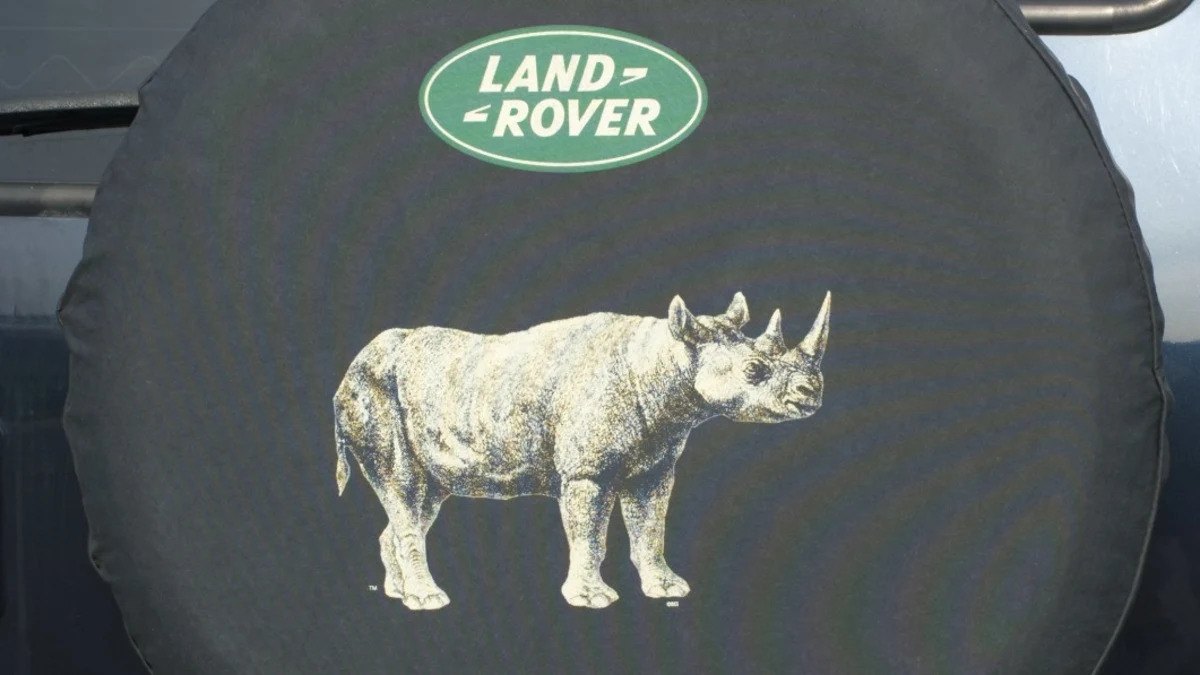
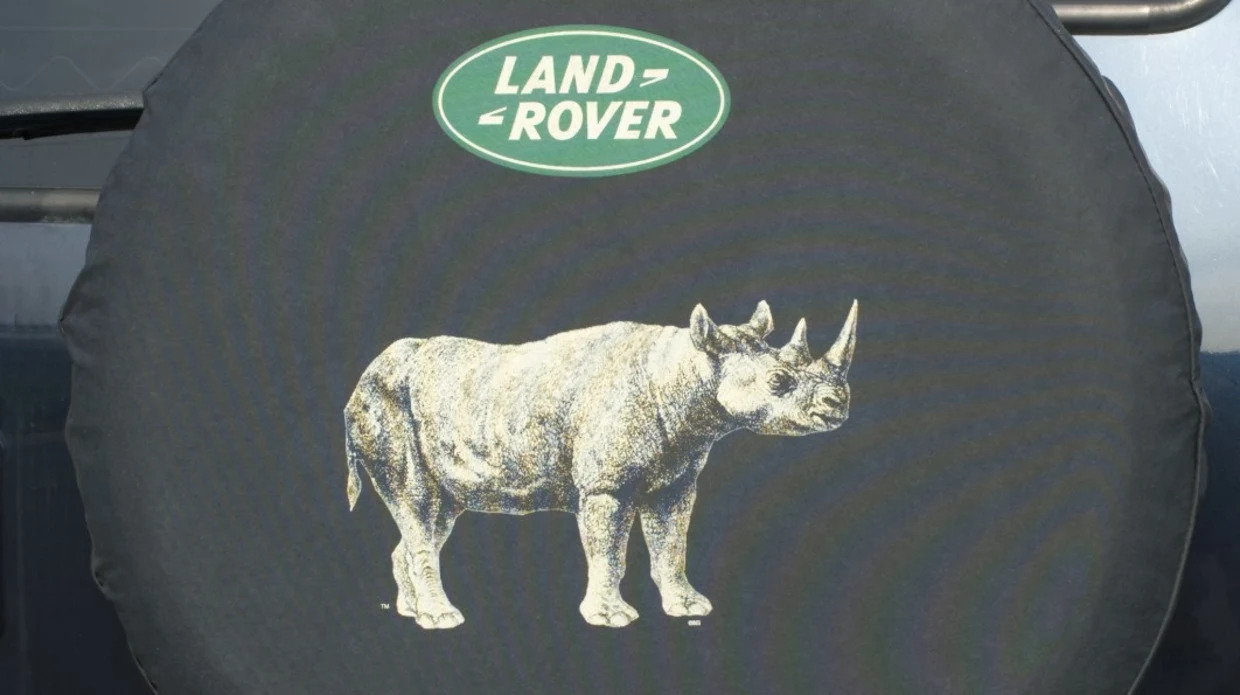
    Forty-some years ago, a famous Land Rover magazine ad tallied the record number of times one of these stalwart vehicles had been gored by a Rhinoceros: 'If you know of a Land Rover that has been gored more times, or by more Rhinoceroses, please contact us. .' The ad was deliberate camp, and a blatant parody of a famous Rolls-Royce ad of the same period. But its point was clear, and essentially true: If you needed to drive where Rhinoceros encounters were a genuine possibility, then the Land Rover was your baby. Whereas if quiet highway cruising was your goal, well then, old boy, you might do as well to shop elsewhere. 

    Four decades later, Rhinoceroses are still rarely encountered in upmarket suburbs; whereas comfortable, competent, even sporty SUV-like vehicles such as the BMW X5, Cadillac SRX, Infiniti FX, Mercedes-Benz M-Class, and Porsche Cayenne frequently are. And competition from these vehicles, more than the occasional large horn driven angrily through an aluminum door, constitutes the biggest threat to Land Rover's territorial dominance. 

    So just last year (2006) Land Rover released the all-new Range Rover Sport: Spirited, sporty, agile, with a snazzy look. (OK, maybe not all that snazzy, but for a Range Rover, it's snazzy.) And frankly more comfortable on the road than off. 

    Range Rover Sport also plugs a gap in the Land Rover model range, between the full-size, hyper-expensive Range Rover and the entry-level, family-friendly LR3. Range Rover Sport is in fact built on a mechanical platform derived from the LR3, but with a shorter wheelbase that emphasizes handling over seven-passenger capacity. Sport also costs a solid $20,000 less than the full-size Range Rover, but only about $4,000 more than a fully equipped LR3. 

    New for 2007: Standard equipment levels are improved with the addition of a Personal Telephone Integration System with Bluetooth capability, and one-touch power window operation at the front passenger's position. The Dynamic Response System, exclusive to the Supercharged model last year, is now available (along with Brembo disc brakes) on the HSE. Supercharged Sports now come standard with Sirius Satellite Radio; and with a choice of Line Oak or Cherry interior wood, Lux or Sport leather, and standard or Stormer 20-inch wheels. 

    Lineup

    Land Rover makes shopping for the Range Rover Sport easy. Just two versions are available, the HSE ($57,235) and the Supercharged ($70,535). The HSE comes with a 300-horsepower, 4.4-liter V8. Not surprisingly, the Supercharged has a supercharged V8 displacing 4.2 liters and making 390 horsepower. Both engines drive through the same six-speed CommandShift automatic that's also fitted in the top-of-the-line Range Rover. Full-time four-wheel drive with a two-speed, shift-on-the-fly, electronic transfer case is standard, as is an electronically controlled, locking center differential. Optional is a rear differential lock ($500). 

    Standard amenities include dual-zone, automatic climate control; cruise control; eight-way power front seats; power outside mirrors, central locks and windows (now with one-touch operation from the front passenger's position); three memory settings for driver's seat and mirrors; digital, 13-speaker, surround-sound AM/FM/CD stereo with six-disc, in-dash changer and auxiliary audio inputs; sunroof; front and rear park assist; five function-programmable key fob; a new Personal Telephone Integration System with Bluetooth capability; and a DVD-based GPS navigation system with voice recognition and dash-mounted, seven-inch, touch-screen LCD display incorporating a picture-in-picture monitor of 4X4 settings and status. 

    Ride and handling features include Dynamic Stability Control and Active Roll Mitigation, which combine to heighten directional control and rollover resistance; Hill Descent Control, which automatically applies appropriate braking on steep downhill inclines; Terrain Response, a manually selectable set of four pre-programmed suspension and engine management settings for various off-road conditions; and, of course, Land Rover's trademark load-leveling, height-adjustable air suspension. 

    Options for HSE include a rear-seat entertainment system ($2,500) consisting of two displays integrated into the back sides of the front seat head restraints, a six-disc CD changer, touchscreen interface, two wireless head sets and a wireless remote control; Sirius Satellite Radio ($400 plus subscription fee); and 20-inch alloy wheels ($4,000). 

    There's also a Cold Climate package ($1,300) with heated seats all 'round and heated windshield and washer jets; a Luxury Package ($3,000), with upgraded leather upholstery, cherry wood trim, a center console cool box, the Cold Climate package, and adaptive headlights that pivot when you turn the steering wheel; and a Dynamic Response Package ($2,000) that combines Brembo front brakes with the Dynamic Response System, which electronically adjusts the stabilizer bars for optimal cornering. 

    The Supercharged model, or S/C, comes standard with everything on the HSE plus the Luxury, Cold Climate, and Dynamic Response packages; Sirius Satellite Radio; and 20-inch alloy wheels. Stormer alloys of equal size are an exclusive S/C option ($1,000), as is Adaptive Cruise Control ($2,000). S/C buyers can choose Lined Oak or Cherry wood interior trim, and Lux or Sport leather with no extra charge for either. Otherwise, the S/C offers the same options (at the same prices) as the HSE. 

    Safety features on the Range Rover Sport comprise twin, dual-stage front airbags; front seat-mounted side airbags for torso protection; full-coverage side curtain airbags to protect against head injury in side-impacts and rollovers; child safety seat anchors (LATCH); antilock brakes with electronic brake-force distribution and brake assist; and all-terrain traction control. 

    Walkaround

    At first glance, the Range Rover Sport could easily be mistaken for the top-of-the-line Range Rover. To the extent there are differences, they are confined to dimensions and subtle styling cues. 

    Although nominally based on the Land Rover LR3 (formerly known as the Discovery), the Sport is smaller on the outside in all but width, and that by less than half an inch. The Sport is more than two inches shorter than the LR3 in overall length; its wheelbase is shorter by more than five inches. It's not as tall, by three inches. In one significant measure, it's identical to the LR3, and that is its track, the distance between the wheels from side to side, which is also less than an inch narrower than the taller and longer top-of-the-line Range Rover. 

    Appearance-wise, the Sport so closely resembles the top-of-the-line Range Rover that it's like the Disneyland version of Main Street: It looks just like the real one built to a slightly smaller scale. Only the most discerning and trained eye will notice that the hood, or bonnet, as they call it on the other side of the pond, is mostly flat, missing the full-size Range Rover's castellations, those longitudinal humps running along the top outer edges back from the headlights. Or that the windscreen and backlight (rear windscreen) are faster, or more raked. Or the presence of understated side skirts, front air dam and rear spoiler. Maybe the front quarter panels' side vents are more obvious, being closely patterned after the LR3's and in stark contrast to the Range Rover's vertical louvers. 

    Because, other than striking a slightly more rakish pose with its rounder, more tapered lines, the Sport contains all the major styling elements of its full-size kin. The compound headlight clusters are indistinguishable. The grille finishes are alike, with the HSE's a matte gray and the S/C's a bright metallic. The roof gets the marque's trademark floating look, achieved by blacking out the roof pillars. A similar character line runs the length of the body side, but with the door handles positioned beneath it to reinforce the Sport's lower profile. Taillights repeat the larger Range Rover's stacked look, only not quite as tall and with the elements staggered from the vertical. And just like the full-size Range Rovers, the Supercharged Sport has chrome-tipped dual exhausts in place of the HSE's bare, single exhaust. 

    Interior

    While the Range Rover Sport's exterior unabashedly mimics the top-of-the-line Range Rover's looks, the interior stays truer to its LR3 underpinnings. 

    The dash top, instrument cluster and steering wheel are direct transplants from the LR3, right down to the stacks of cruise control buttons and redundant audio controls next to the thin, vertical, metallic horn buttons along each side the airbag cover in the steering wheel hub. Curiously for a serious off-road vehicle, the tachometer has no redline, leaving drivers dependent on the Sport's computers to coordinate engine speed and gear selection with terrain idiosyncrasies. Although the center stack structure lays back at a more ergonomically friendly angle than the LR3's, the switches, knobs, buttons and display screens are the same as the LR3's, too, which while plentiful, are fairly easy to decipher. The four dash-top vents are shaped differently, but located in the same positions, belying the shared, behind-the-scenes framework. The navigation system's display is recessed in the dash at the top of the center stack and accessible to both front seat occupants. 

    The seat contours are more defined than both the LR3's and the full-size Range Rover's standard accommodations, although the seat bottoms could be deeper and provide more thigh support. More pronounced bolsters in front add lateral support, and the rear seat's softer cushions render it less bench-like than it looks; we appreciated this over a several hour drive from Aspen, Colorado, to the smooth red rock around Moab, Utah. Infinitely adjustable, inboard arm rests in front ease long, droning, interstate drives. 

    The head restraints could be better, however. The positioning of the front-seat head restraints favors the back-seat movie watchers. To ensure the best viewing experience, the head restraints, which double as housings for the video screens, are fixed in a vertical plane; in other words, they're adjustable only up or down and cannot be angled forward or backward. The way I like the driver's seat configured, in placement fore and aft, height and seatback angle, the head restraint blocked me from holding my head upright, forcing me to lean it forward. This awkward angle was literally a pain in the neck. Reclining the front seat a bit lessened the discomfort, by allowing me to hold my head upright. Still, this work-around left me wondering why, in a vehicle this expensive, I should have to be the one to compromise. Also, and as with their counterparts in the full-size Range Rover, the large head restraints block much of the forward view for rear-seat passengers. A panel of auxiliary jacks for the entertainment system is set into the rear of the front center console, along with the levers for the optional rear seat heaters. 

    In all interior measures, the Sport returns mixed comparisons. The front seat offers less legroom than the LR3 but more legroom than the Range Rover, and it offers less headroom than either. Its rear seat headroom is less than the LR3 but about the same as the top model, and legroom is the same as the LR3 but more than the top model. 

    In cargo space, the Sport fits where it logically should, offering almost 20 fewer cubic feet than the much more upright LR3 but less than four fewer than the Range Rover. Save for cup holders, of which there are but two, protected by a sliding cover in the front center console, incidental storage is decent. The nifty little cool box packaged with the Luxury Interior option fits in the cubby in the center console aft of those cup holders and chills small beverage bottles and snacks. The front doors have two map pockets, the rear doors, one. Pouches for magazine and headsets are stitched into the backside of the front seat backs. The bi-level glove box's upper element doubles as a CD rack. Atop this, a divided tray for odds and ends fills the space between the air conditioning registers. 

    Driving Impression

    Land Rovers must, by definition, be at least as adept off-road as on. The Range Rover Sport may push the needle a bit closer to the on-road end of the gauge than many of the marque's faithful will find appropriate. But most needn't worry, as it'll still go where many will hesitate to tread, no matter how lightly. 

    For this, credit the chassis engineers' unwavering commitment to such measures as suspension articulation and angles of approach, ramp break-over and departure. Yes, it trails its kin in almost every measure, the LR3 the most. Still, we climbed rock faces nearing a 45-degree gradient with minimal tire slippage, thanks to the all-terrain traction control. Dangling a wheel in the air while crossing fields of boulders upset neither us nor the Sport. Hill Descent Control worked its magic on slopes ranging from loose gravel to slippery silt. The biggest obstacle we faced over an afternoon of serious off-roading was our reflexive tendency to interfere with the various terrain-sensing systems. 

    What impressed us is how well the Sport comports itself when the going gets paved. Both engines come from Jaguar, so urban and exurban refinement is presumed. The automatic transmission is sourced from Aston Martin, noted for high-performance polish. Land Rover, Jaguar and Aston Martin are owned by Ford Motor Co. and share technology. 

    Tooling around Aspen, the HSE, with its naturally aspirated V8, felt more comfortable, more at home, than the Supercharged. Throttle response in the HSE seems more linear, shifts more subtle, the ride more compliant. The Supercharged seems occasionally to catch the transmission off guard, as if the transmission isn't quite sure what the engine wants by way of managing the gear shift. Throttle tip-in, too, was sometimes a bit more aggressive than we wanted, making difficult a calm acceleration from a stop. The lower profile tires' ride is a bit harsher over rough and broken pavement. These issues hurt the Supercharged in stop-and-go traffic. 

    Both the HSE and the S/C account well for themselves on the interstates, even when pushing the posted limits more than just a little; at highway speeds, the air suspension automatically lowers the Sport one inch, lessening drag and stabilizing the ride. At highway speeds, the speed-sensitive assisted steering feels a tad light, with not as much on-center feel as we like. Cranked up to seriously extra-legal rates of travel, though, directional stability improves markedly. 

    The adaptive cruise control works as promised; the Sport maintains your choice of one of four programmed following ranges, which are based on time, not distance, slowing perceptively but not obtrusively as the gap to followed vehicles closes, then gently building speed when the road is clear. No, the system won't slam on the brakes if it senses impending doom and you're too busy chatting on the cell to notice, but it will sound an alarm to get your attention. 

    Braking is more than adequate, much better than older Land Rovers, for which a couple of marmots scurrying across the road on a pass above Aspen should be eternally grateful. There is, however, more dive under braking, and squat under acceleration, for that matter, than we expected with a suspension as sophisticated as this one. 

    Range Rovers have never been known for their prowess on winding, two-lane back roads. No longer, at least in the Sport. And this holds for both the HSE and the S/C, especially now that the HSE can be ordered with the excellent Brembo brakes and Dynamic Response suspension. The engine, the air suspension and the tires play their part, but sharing top billing are the transmission and the aforementioned Dynamic Response System (DRS). 

    The transmission adapts to a wide variety of driving styles, from the sporty to the laid back. When it senses a heavier foot on the gas and high cornering loads, it heads toward the sporty end of the spectrum, downshifting more readily and a. 

    Summary

    The Range Rover Sport retains the superb off-road capability for which Land Rovers are legendary, but delivers on-road performance as good as or better than the luxury-utility competition. 

    NewCarTestDrive.com correspondent Tom Lankard drove Range Rover Sport models in Aspen, Colorado, Moab, Utah, and Carmichael, California. 

    Model Lineup

    Range Rover Sport HSE ($57,235); Range Rover Sport Supercharged ($70,535). 

    Assembled In

    Solihull, England. 

    Options As Tested

    Adaptive Cruise Control ($2000); rear seat entertainment system ($2500). 

    Model Tested

    Range Rover Sport Supercharged ($70,535). 

    2007 Land Rover Range Rover Sport Information

    Research the 2007 Land Rover Range Rover Sport specs, photos, reviews and ratings here. Ready to buy a 2007 Land Rover Range Rover Sport? Find Land Rover car dealerships in your area, search for Land Rover Range Rover Sport deals, rebates and incentives, or browse 2007 Land Rover Range Rover Sport vehicles for sale.

    *The data and content on this web site is subject to change without notice. Neither AOL nor any of its data or content providers shall be liable for errors in the content, or for any actions taken in reliance thereon.

    Powered by
    Advertisement

    FIND A GREAT USED CAR

    Just Say - SHOW ME THE CARFAX
    Order Carfax Report
    Powered by
    Get a free CARFAX record check for a used car
    Go >>

    Need an Auto Loan?

    We Can Help!

    Presented By Apply In One Easy Step »
    Read 2007 Land Rover Range Rover Sport reviews from auto industry experts to gain insight on the Land Rover Range Rover Sport's drivability, comfort, power and performance.
    Best Deal:
    Our Price:
    Savings:
    MSRP:
    Go Back to Best Deals »