








Every once in a while, a car comes along with so much hype that not only does it capture the attention of car enthusiasts everywhere, it creates a frenzy among publications all over the world vying to be the first to drive it, test it and compare it with others. The Nissan GT-R is one such car. As usual, R&T was at the front of the line to drive, test and compare the U.S.-spec version of this very special car against its biggest rivals, the Chevrolet Corvette Z06 and Porsche 911 Turbo.
Regular readers of this publication no doubt remember seeing our first drive of the GT-R four months ago, when we evaluated a Japanese-spec version in Germany. There, we got a good idea of what the car was all about, but not the entire picture. We knew that the GT-R's performance would place it among the most elite 2+2s in the world...still, nothing prepared us for what was in store when Feature Editor Mike Monticello, R&T Specials Editor Andrew Bornhop and I took the first U.S.-spec GT-R along with the Corvette Z06 and 911 Turbo to the California countryside. We took on some of the trickiest mountain roads in the state and the challenging Buttonwillow Raceway (where former Nissan factory driver Steve Millen joined us). Here we discovered that not only did the GT-R measure up to the hype, it sliced it to pieces with a samurai sword.
2008 Porsche 911 Turbo
Points: 380.7
Lap Times: 2:02.1
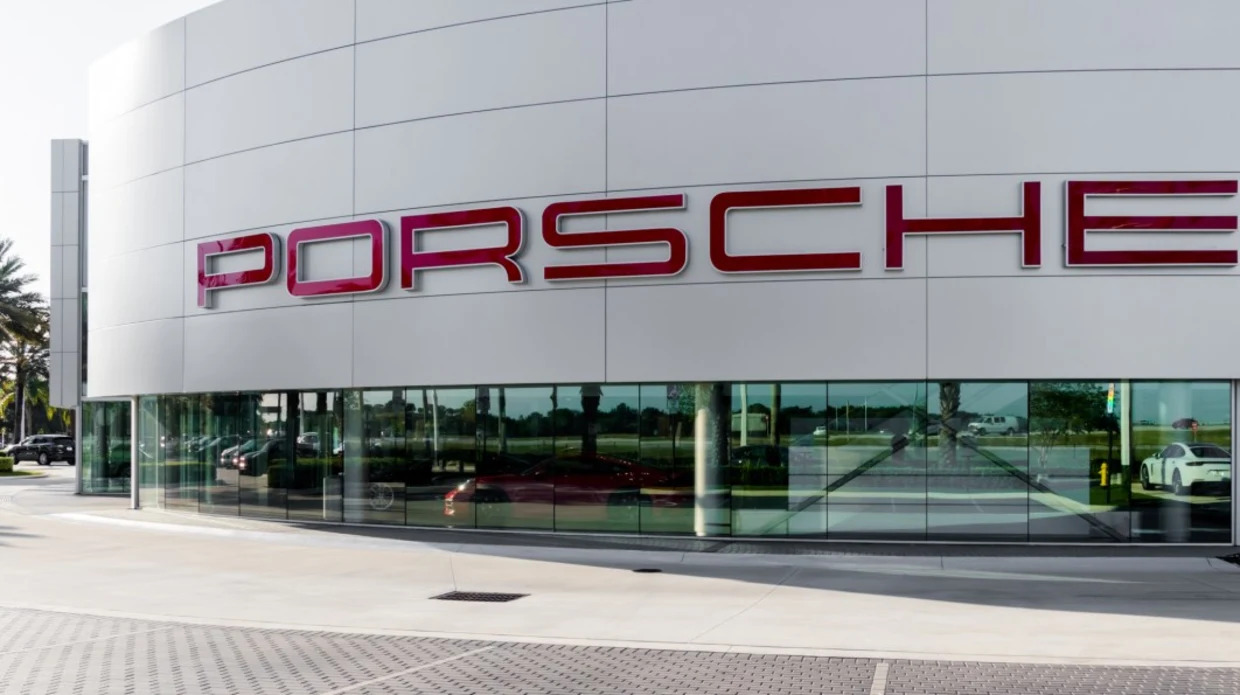
It's easy to see why people feel that there is no substitute for a Porsche after driving the 911 Turbo. This car seems to have it all, incredible performance, a high level of comfort, meticulous German engineering and the aura that comes from having a rich racing heritage. But it takes more than past laurels to win an R&T comparison test, and the 911 Turbo, which has won a share of them, found itself in the middle of a dogfight this time.
That Nissan engineers used the 911 Turbo as their benchmark is no secret. At every GT-R event we've attended, a Porsche 911 Turbo was always lurking in the background, presumably used by Nissan engineers as a target vehicle. They equaled the Porsche's 480-bhp 3.6-liter flat-6's output. This allows the 3710-lb. 911 Turbo to run to 60 mph in 3.4 seconds, good enough to match the Corvette and GT-R, but not enough to beat them. The race to the quarter-mile mark is virtually a dead heat, with both the 911 Turbo and Corvette getting the job done in 11.7 sec., and the GT-R coming home a hair-width behind.
"The 911 Turbo pulls like a proverbial freight train when on boost, but there is a slight bit of lag when compared with the GT-R's engine, best described as a gradual ramp-up power, as though the 911 has larger turbos than the GT-R," Bornhop said.
In the handling department, we came away somewhat disappointed with our silver Porsche. One would expect that with all-wheel drive, the 911 Turbo would gobble up sweepers and mid-speed corners, but it understeered significantly entering tight turns and oversteered through the faster stuff. Some of us felt that the Michelin Pilot Sport PS2 tires might be a factor, while others pointed to the softly sprung suspension. Whatever the reason, the Porsche simply wasn't as sharp as the GT-R on winding mountain roads or at the racetrack.
"There's no denying that the 911 Turbo has a surprising lack of grip, despite awd. It predominantly understeered, seriously chewing up the front tires, and was quite tail-happy when trying to put the power down exiting corners," Monticello remarked.
The 911 Turbo did shine on the open highway. Its interior was easily the most luxurious of the three, with comfortable and supportive front seats and lots of leather. The Porsche ranked high in the category of "the car I would most like to drive across the country." On the negative side, there was excessive road noise at highway speed, and the small buttons for the radio/navigation/climate control made operation difficult while driving.
The 911 Turbo's price tag of $135,470 immediately puts it at a disadvantage in this test...the reality is that's the price one pays to drive, and be seen driving, Zuffenhausen's best. But when it comes to just the numbers, Japan's new super coupe has caught and surpassed the German thunder car, meaning that now, when you say Porsche, there is a substitute.